
What is an asylum application?
Applying for asylum in Belgium means asking the Belgian state for protection because it is not safe for you to return to your home country. The process can feel complicated, but many organisations are here to support you every step of the way.
This guide explains the main stages so you know what to expect.
1. Registering Your Asylum Application
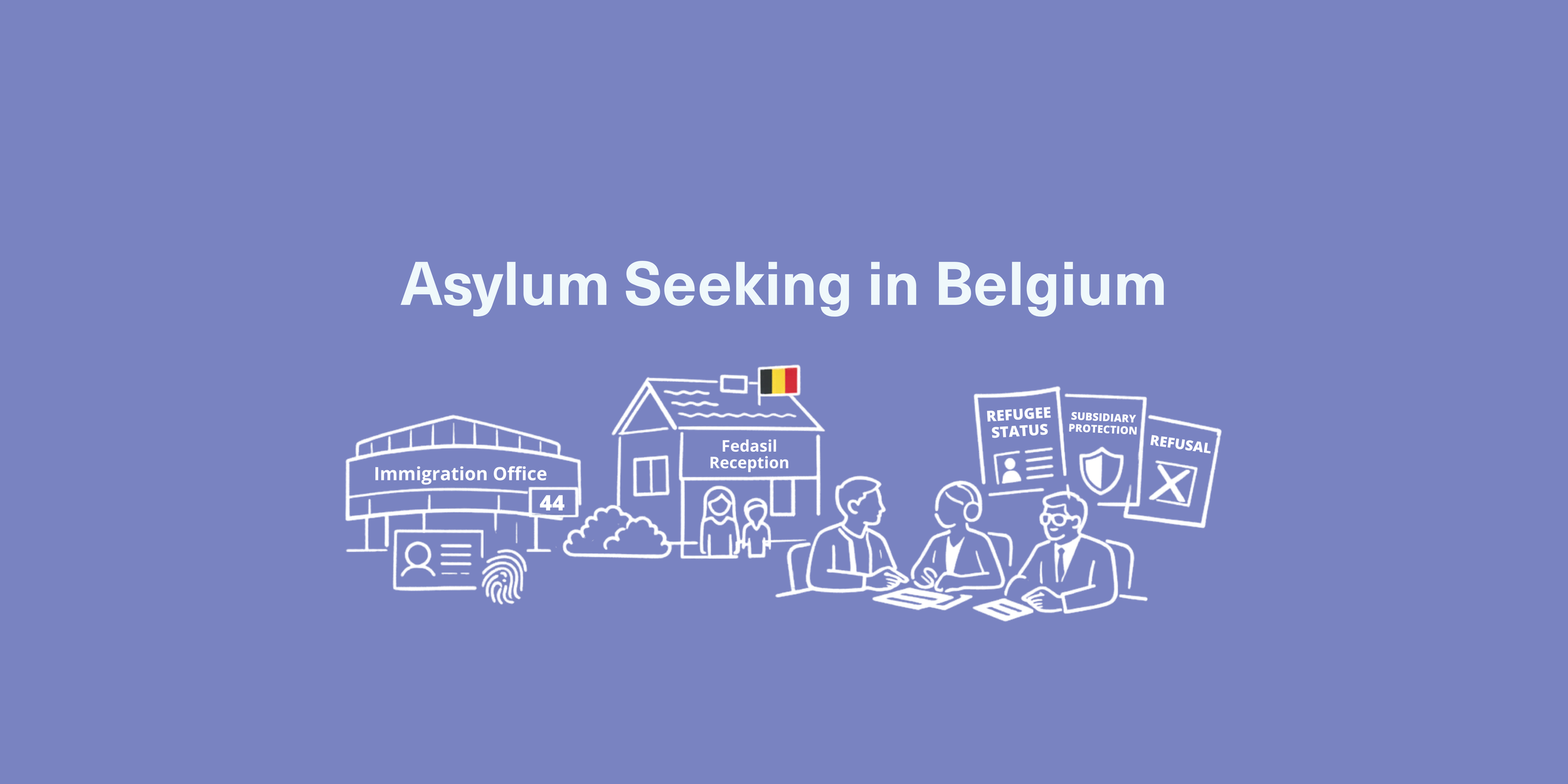
the Immigration Office
To apply, you must present yourself at the Immigration Office in Brussels (Boulevard Pacheco 44, 1000 Brussels).You can go Monday-Friday but need to be there early before 8.30am.
- First, your identity will be recorded.
- You will then have a short interview about your journey and basic personal information.
- Your fingerprints may be taken (as part of the European “Dublin” system). After registration, you will receive a temporary document proving you are an asylum seeker. For more information, please feel free to consult the Immigration Office brochure.

2. First Reception and Accommodation
Fedasil
Throughout this process, you will be supported byFedasil, the Belgian federal agency responsible for receiving and supporting asylum seekers.
- It will provide you with accommodation in one of its reception centres or housing facilities.
- It will also provide food support, either through meals offered in the reception centre or through meal vouchers that you can use to buy food.
- You will also have access to medical care through the centres or by submitting a requisition request to the Agency.
- Fedasil will also help you understand the different rights and responsibilities you have throughout this procedure. Good to know: You may not stay in the same Fedasil centre throughout the entire procedure. You will usually first be received in a short-term reception centre and then transferred to a longer-term reception centre.
Once you have received your orange card through Fedasil, you will be allowed to start working.
3. The Protection Interview
the Office of the Commissioner General for Refugees and Stateless Persons (CGRS)
-
The Office of the Commissioner General for Refugees and Stateless Persons (CGRS) will invite you to a detailed interview concerning your asylum application once your registration file has been processed. This interview is decisive for your application, so it is recommended to have the support of a lawyer during it. A lawyer can be appointed for you if you request legal assistance from the Legal Aid Office and provide the necessary supporting documents.
- You will be asked to explain why you left your country.
- Do not hide any persecution, risk, or danger you have faced and that led you to apply for asylum.
- Bring any documents that could serve as evidence and support your statements, if you have them.
- An interpreter will be provided if needed. The officers on site are trained to listen to you and to understand your personal story as fully as possible.
4. The Decision
The Office of the Commissioner General for Refugees and Stateless Persons / the Council for Alien Law Litigation
After this interview, the Office of the Commissioner General for Refugees and Stateless Persons will inform you of its decision regarding your asylum application. This decision can fall into one of three categories:
Moving forward after a refusal.
A refusal does not mean your journey is over. You can:
Ask a lawyer or a support organisation such as ours for help in preparing your appeal;
Remain in a Fedasil reception centre while your appeal is being processed.
If your appeal is also rejected, you will most likely be asked to leave Belgium. However, you still have the right to humanitarian guidance and legal information.
Your rights and responsibilities during the asylum procedure
While your application is being examined, you have the right to:
- A safe accommodation
- Medical Care
- Legal assistance
- An interpreter during interviews
- The protection of your personnal data
- Access to schooling for your children
- Have your human dignity respected and to be treated with respect
In return, you are expected to:
- Attend all your appointments
- Keep your contact details up to date
Looking after yourself during this time
The asylum procedure can be long, uncertain, and difficult to go through. Waiting for a decision while living in a reception centre is not always easy. During this time, it is important to take care of your physical and mental health so that you can feel as well as possible in your daily life. At Oasis Belgium, we organise workshops, information and learning sessions on different topics, as well as calmer moments where beneficiaries can meet, talk, and build connections with one another.
GHAITH AL NAS
In October 2025, Oasis Belgium launched a new project aimed at supporting families arriving from Gaza.
Named “Ghaith Al-Nas” by the families themselves, the name literally means “Rain for the People.” It evokes rain as a blessing after drought and symbolises hope, renewal, and life.
The project began when Dr Mandana Mehta was asked to provide medical follow-up for five newly arrived Gazan families.
What started as a focused medical initiative quickly grew into full-time support: helping families navigate the Belgian system, respond to urgent health needs, and offering both practical and reassuring support.
Help us support these families:
Many organisations in Belgium can help you understand the asylum procedure, prepare for interviews, access healthcare, or find emotional support. You do not have to go through this period alone.