
What Is Domestic Abuse?
Domestic abuse is any behaviour used by a partner, ex-partner, or family member to gain power and control over you. It can happen to anyone, regardless of age, gender, background, or relationship status. Abuse is never your fault. You deserve safety, respect, and support.
Two models to better understand domestic abuse
The cycle of violence
Domestic abuse often follows a repeated pattern known as the cycle of violence, which typically involves several phases: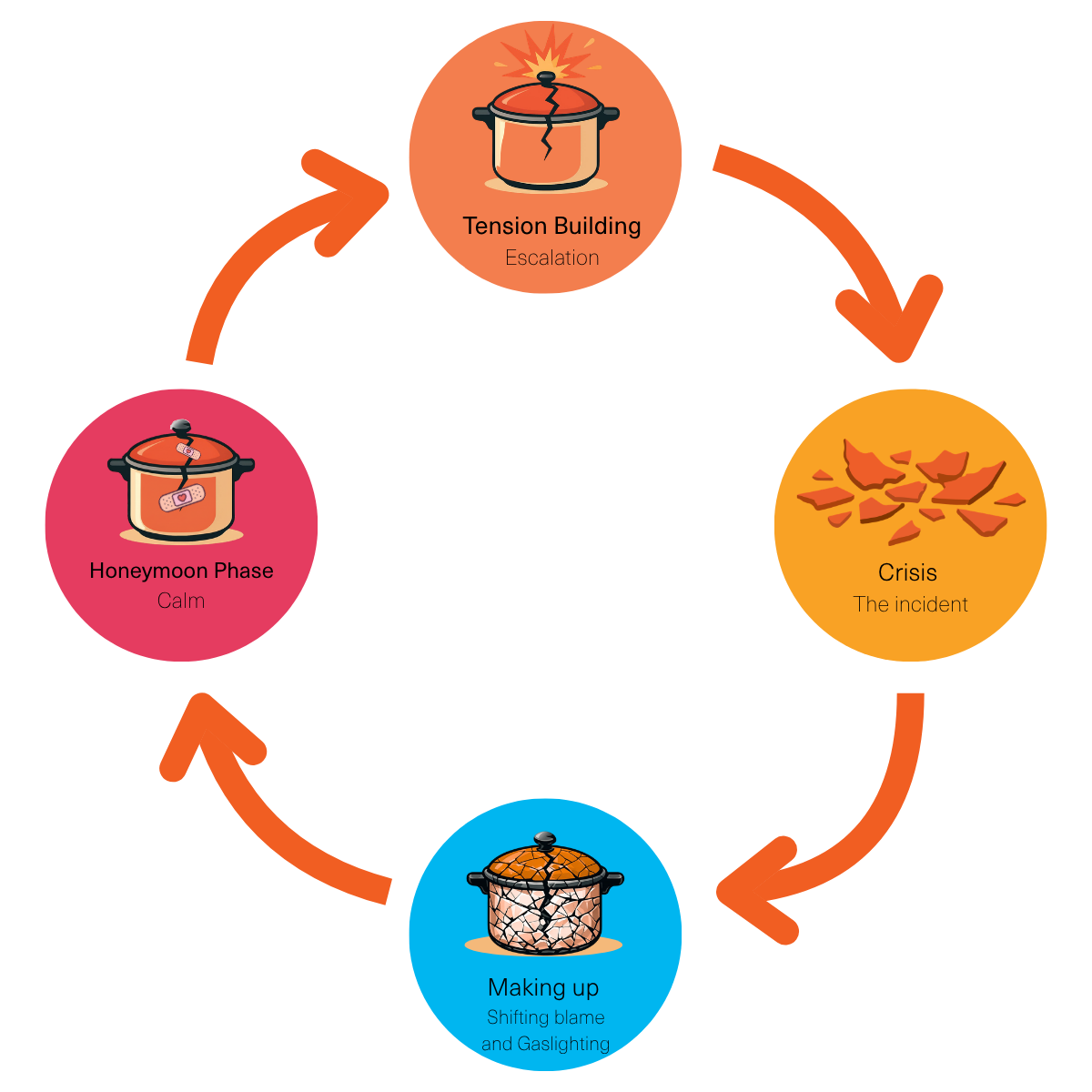
The power and controle wheel

The Power and Control Wheel illustrates how abusers maintain their hold over someone in a relationship. At the centre are power and control, surrounded by behaviours such as:
Intimidation – threatening looks, aggressive gestures, or the destruction of objects or property.
Emotional abuse – belittling, humiliation, and psychological manipulation.
Isolation – controlling where you go, who you see, and what you do.
Minimising, denying, and blaming – downplaying the abuse, denying what happened, and shifting the blame onto the other person.
Using children – threatening to take the children away or using them to make the other person feel guilty.
Economic abuse – limiting access to money or other resources.
Coercion and threats – threatening to harm you, harm themselves, or take legal action.
Male privilege / sense of entitlement – treating the other person as inferior and making all the decisions.
This tool helps show that abuse is not just a series of isolated incidents. It forms part of a broader pattern aimed at maintaining power, control, and dependency.
Domestic Abuse Takes Many Forms: Understanding the Different Types of Abuse
Domestic abuse is not limited to physical violence. It can take many forms, some of them less visible.
There are six main types:
Physical abuse: hitting, pushing, strangling, blocking someone’s movements, or using objects or weapons to cause harm.
Psychological or emotional abuse: manipulating, belittling, threatening, humiliating, or isolating someone.
Coercive control: monitoring you, making decisions for you, restricting your contacts, or limiting your freedom.
Economic abuse: controlling your money, preventing you from working, or creating debt in your name.
Sexual abuse: any sexual activity without consent, including pressure, coercion, unwanted touching, or rape.
Digital abuse: monitoring your phone, demanding passwords, tracking your movements, or harassing you online.
Domestic abuse is not always visible. If someone’s behaviour makes you feel afraid, controlled, isolated, or unsafe, you may be experiencing abuse.
In Case of Immediate Danger
Your safety comes first. If you feel in immediate danger, call 112 without delay. If possible, move to a safe place and take only essential items, but only if this can be done without risk. Do not confront the abuser.
The video alongside also highlights other useful steps you can take in situations of domestic abuse.
You are not alone
If you are not in immediate danger but do not feel safe, you can still reach out to Oasis or other support services for help. We are here to listen, support you, and help you understand your rights and the options available to you.